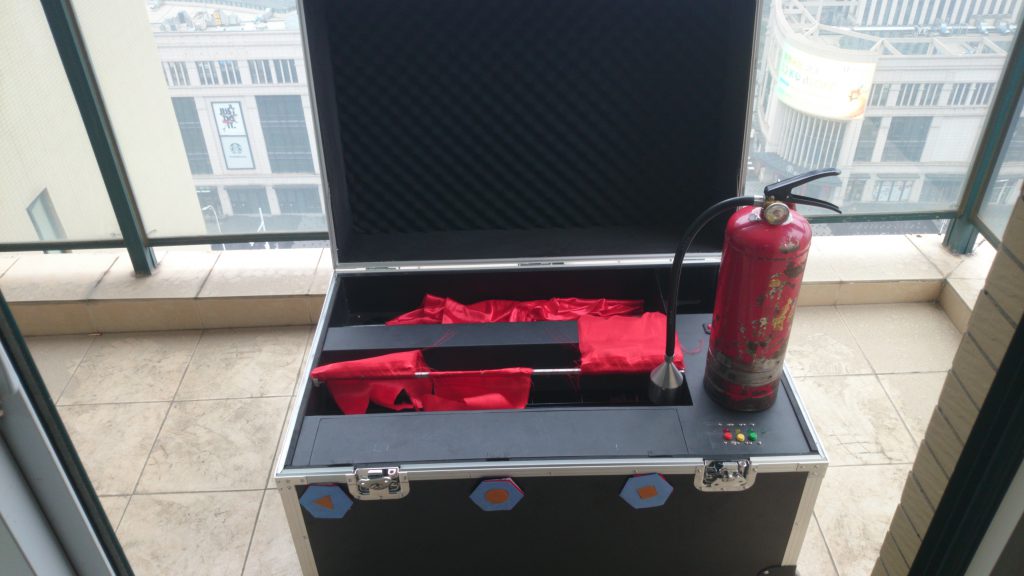
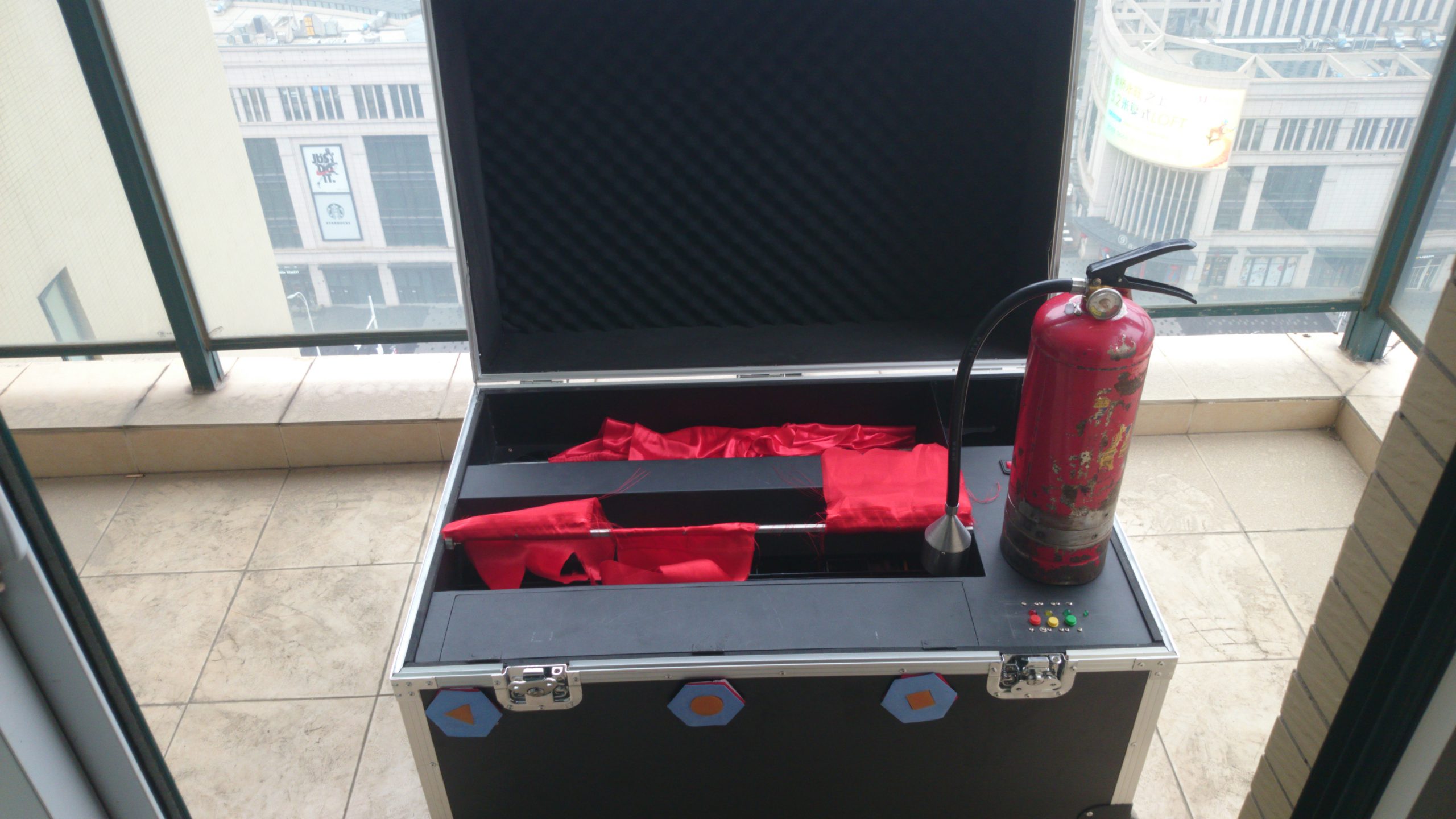
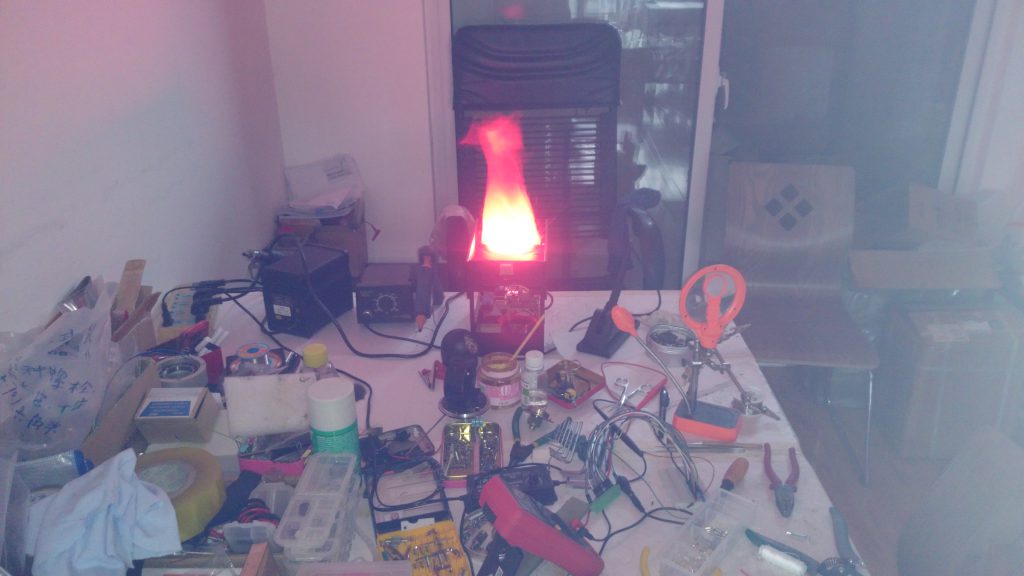
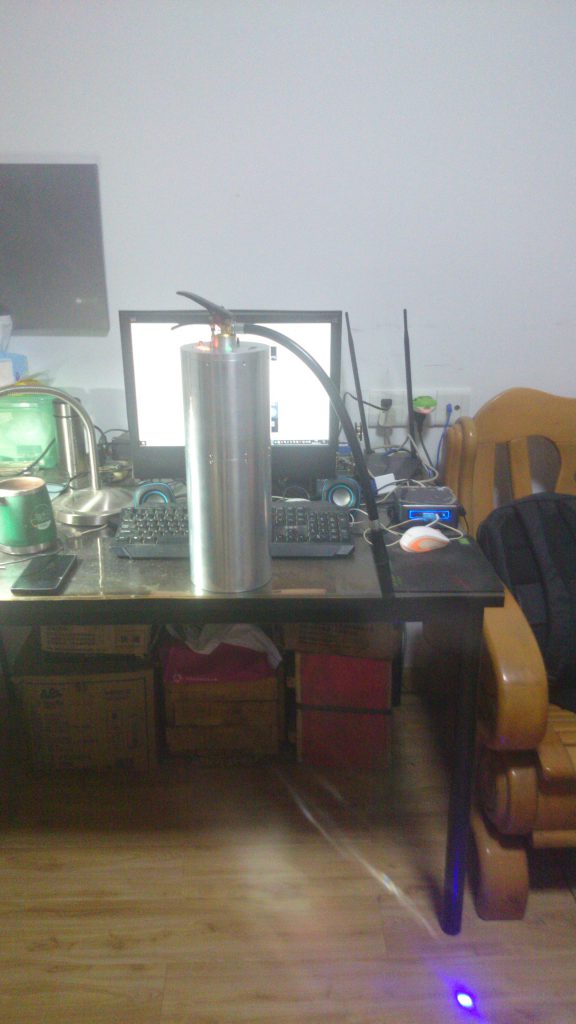
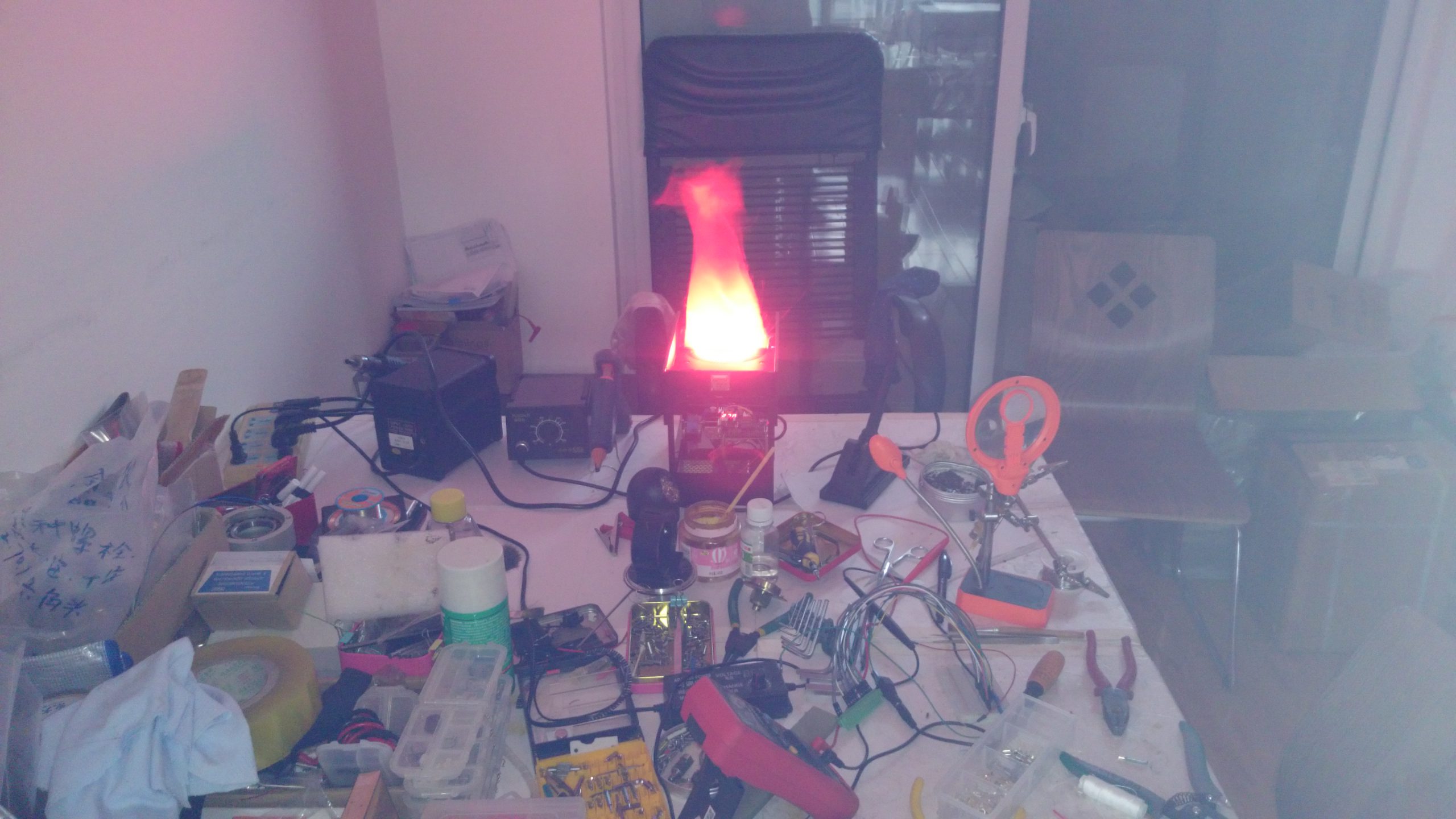
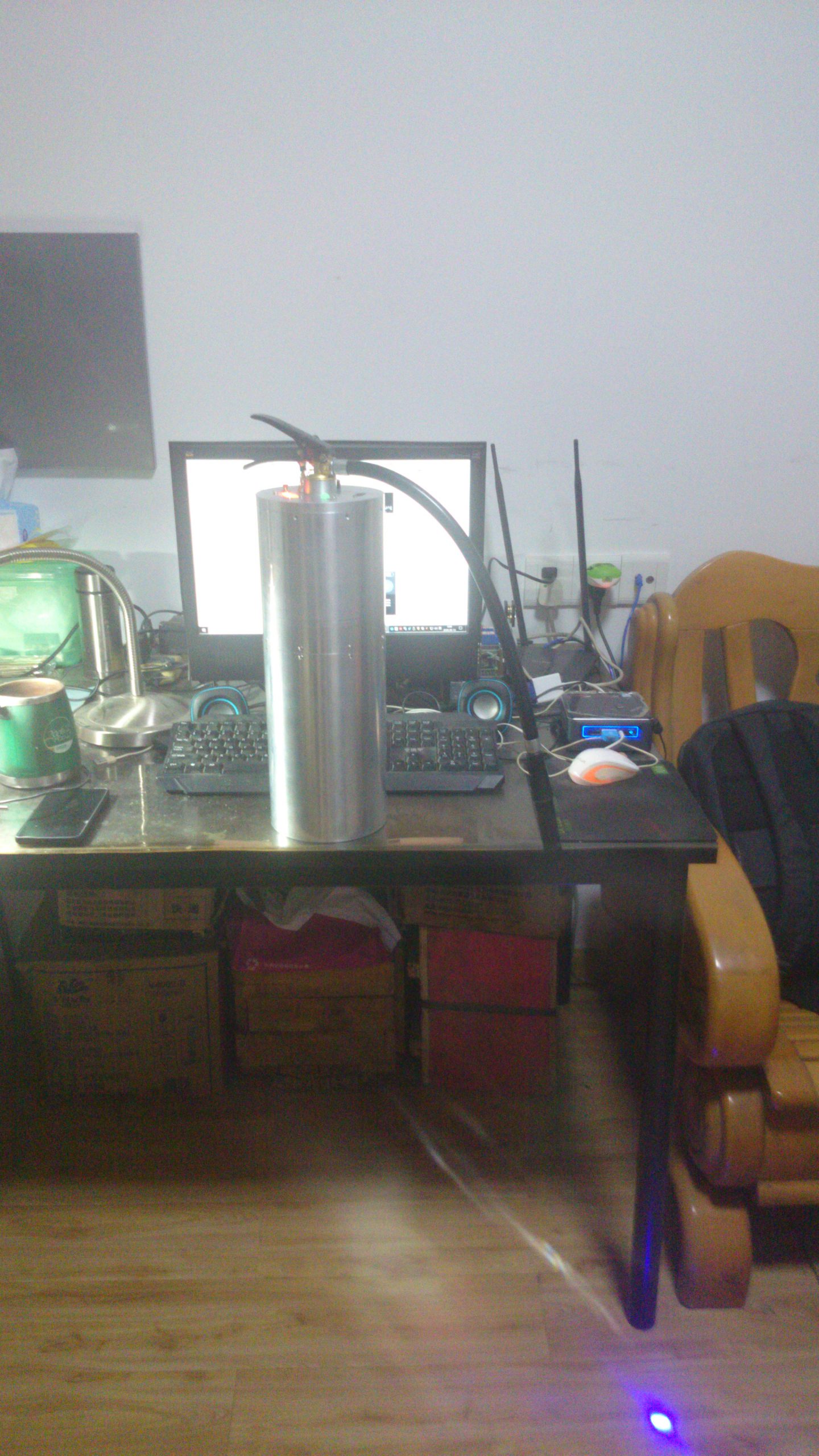
The simulated fire extinguishing equipment consists of two parts: a simulated flame and a simulated fire extinguisher. For the flame section, three solutions were tried: a fan blowing red cloth with lighting, a fan blowing steam with lighting, and projection. The core requirement addressed is to achieve aiming determination.

Requirements:
1、仿真火焰设置3团小火焰和1团大火焰。2米外手持灭火器对准小火焰根部,按压压把模拟灭火操作。在规定的时间内3团小火焰全部扑灭,灭火过程完成;如果规定时间内未完成3团小火焰扑灭,大火焰升起模拟火势增大。
2、设置3个难度级别,分别对应3种不同燃烧物引起的火灾,即所需灭火器持续喷射的灭火时间不同。
v0, using cardboard as the structure to verify:
1、风速与布质量之间的关系,试图找到多大的风速能够把什么规格(长宽)的布条吹成竖直以模拟火焰效果。
2、raspberry PI和arduino之间的蓝牙通信。3、python+opencv实现判定瞄准的可行性。
First version fire effect
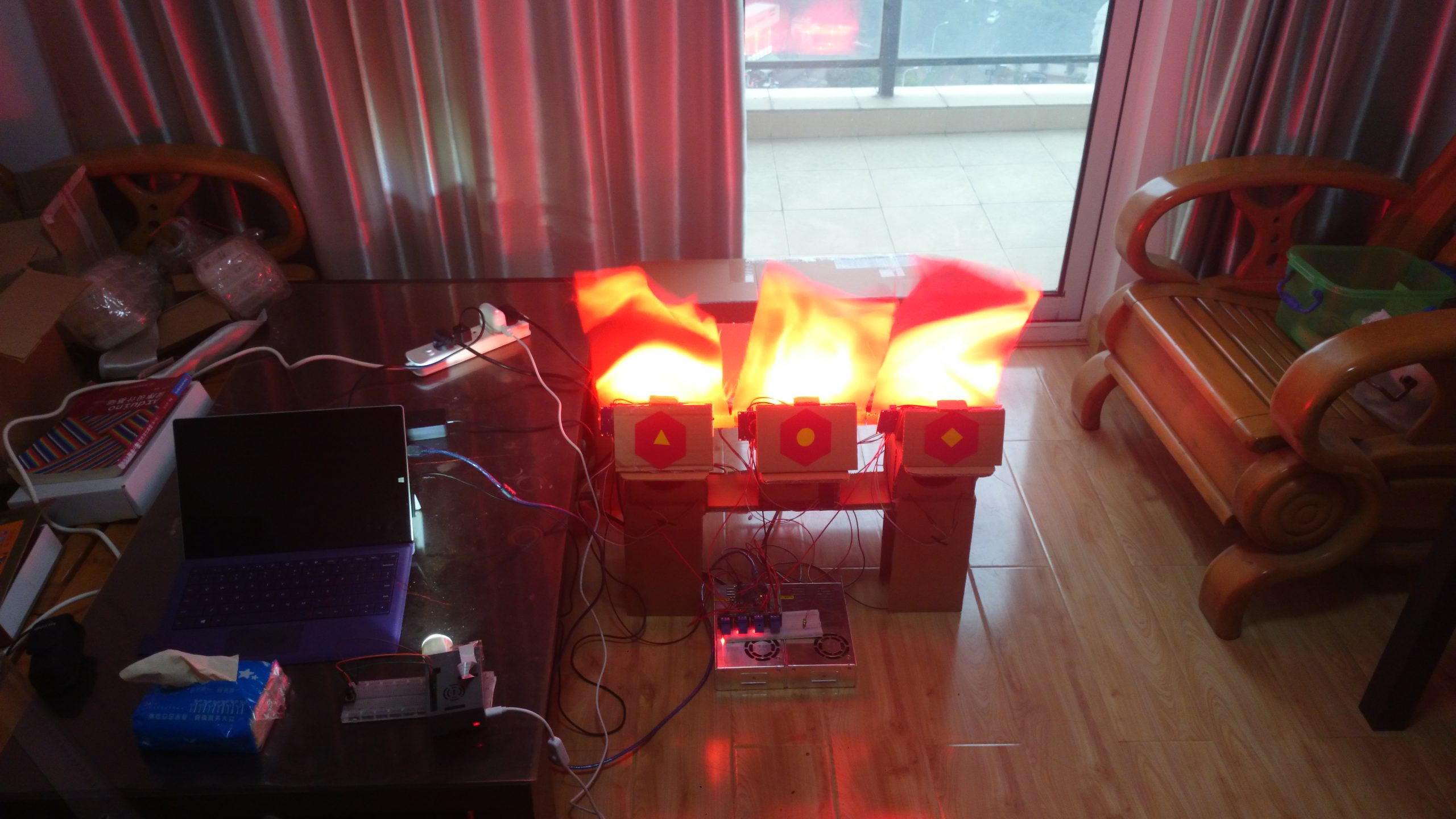
The fire was successfully extinguished
The fire extinguishing failure occurred, and the extinguisher was not extinguished before the extinguisher capacity was used up (i.e., within the specified time), causing the fire to grow stronger
v0.1 uses SolidWorks to implement structural modeling, machining parts and assembling and debugging according to the model. Question:
1、火焰部分选择的材料过于沉重,且尺寸过大,导致不易便携
2、蓝牙信号在wifi环境下有干扰(蓝牙和WiFi都用2.4G频段)
3、手持摄像头做对准的过程,由于抖动,识别对准效率不高
4、基于真实灭火器改进得到的仿真灭火器,结构上很难配合电子模块
Structural design of SolidWorks
Physical items
v0.2a, improved based on the issues of v0.1 mentioned above
1、重做火焰端结构设计,变更材料,体积更小更轻便
2、重新设计灭火器,以配合选定的电子模块
3、重做软件架构
4、重做opencv识别方式,以验证是否瞄准

3 main components: small flame, large flame, fire extinguisher. Structural design of SolidWorks

1. Small flame components 2. Fire extinguisher assembly
Demonstration
v0.2b, the simulated furnace equipment uses steam combined with lighting to simulate flame effects. Blue light from the extinguisher penetrates water vapor, forming a light spot behind the flame to achieve alignment determination.
v0.2c projects flame effect animations onto the wall to simulate flames, and the extinguisher's blue light reflects off the wall onto the ground to form a light spot, enabling alignment detection.
Prototype: